
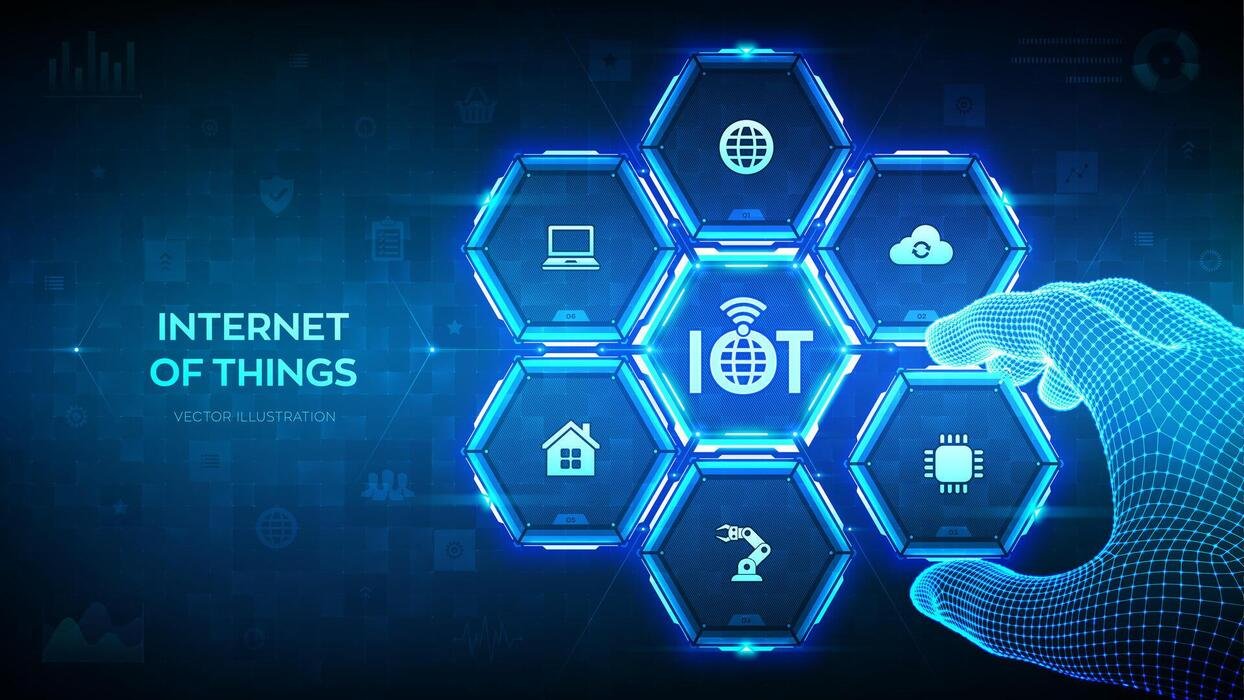
The Invisible Network Connecting Your World: A Beginner’s Guide to IoT
Have you ever rolled out of bed, muttered a quick command to your room, and watched your lights fade up while your coffee maker started brewing in the kitchen? Or maybe you have a band strapped to your wrist that buzzes when you have sat at your desk for too long.
None of this is magic. It is the Internet of Things (IoT), a massive, quiet network of everyday objects that talk to each other so you do not have to do the heavy lifting.
Here is a breakdown of what IoT actually means, how it shapes your daily routine, and why it matters.
What Exactly is IoT?
At its core, IoT refers to physical objects—from your refrigerator to heavy factory machinery—that are embedded with sensors, software, and internet connectivity. This built-in tech allows these “things” to gather real-world data and share it across the web automatically, entirely without human intervention.
The Secret Sauce: IoT Sensors
Think of sensors as the eyes and ears of the digital world. An IoT sensor is a tiny electronic component that feels the environment around it. It takes real-world events—like a drop in temperature, a sudden movement, or a shift in pressure—and converts them into digital information that a computer can read.
- Temperature Sensors: Keep tabs on the heat levels inside your living room or a massive server room.
- Motion Sensors: Notice if someone walks past your front porch.
- Light Sensors: Determine whether it is pitch black outside or glaringly bright.
- Pressure Sensors: Monitor the force running through water pipes or gas lines.
How the Magic Happens (Step-by-Step)
[Sensors Collect Data] ➔ [Data Sent Over Network] ➔ [Cloud System Analyzes It] ➔ [Automated Action Triggers]
- Detection: The device’s sensors gather raw environmental metrics, like a spike in room temperature.
- Connectivity: The device beams that data through Wi-Fi, Bluetooth, or cellular networks up to the cloud.
- Data Processing: A cloud system or edge server processes the data to figure out what is happening.
- Action: The system handles the problem on its own—like firing up the AC or dropping a warning text to your phone.
The DNA of IoT: Key Characteristics
What makes a system truly part of the Internet of Things? Look for these distinct traits:
- Constant Connectivity: Devices stay linked to the web, allowing you to check your home security cameras from the other side of the planet.
- Smart Automation: The system acts on its own. Your thermostat turns down the heat when it notices the house is empty to save you money.
- Real-Time Monitoring: Everything happens instantly. Your fitness tracker logs your heart rate live as you hit the treadmill.
- Interoperability: Devices from completely different brands can seamlessly chat with one another. Your Amazon or Google smart speaker can turn on smart bulbs made by a completely different manufacturer.
- Scalability: You can easily scale a network up, whether you are linking a single new light bulb at home or dropping thousands of traffic sensors across a major city.
Where You Encounter IoT Every Single Day
| Sector | Real-Life Application | What it Achieves |
|---|---|---|
| Smart Homes | Connected thermostats, voice assistants, and smart doorbells. | Automates comfort, secures your doors, and lowers utility bills. |
| Healthcare | Wearable heart monitors and elder-care facility sensors. | Tracks vitals remotely and detects emergency falls early. |
| Smart Cities | Adaptive streetlights and waste bins with fill-level sensors. | Saves city electricity and optimizes garbage truck routes. |
| Logistics & Transit | Connected cars and temperature-tracked cargo containers. | Monitors vehicle health and protects perishable goods during delivery. |
| Smart Agriculture | Soil moisture sensors and livestock GPS collars. | Conserves water by irrigating fields only when dry. |
| Industry | Factory machinery equipped with heat and vibration sensors. | Predicts hardware breakdowns before costly downtime happens. |
The Takeaway
The Internet of Things isn’t just a tech trend for early adopters. It is an evolving framework designed to take the friction out of daily life. By letting our devices talk to one another, we spend less time managing the objects around us and more time focusing on what actually matters.
